
Dean of Students/Chaplain
Meet
University Chaplain | Dean of Students | Youth Advocate
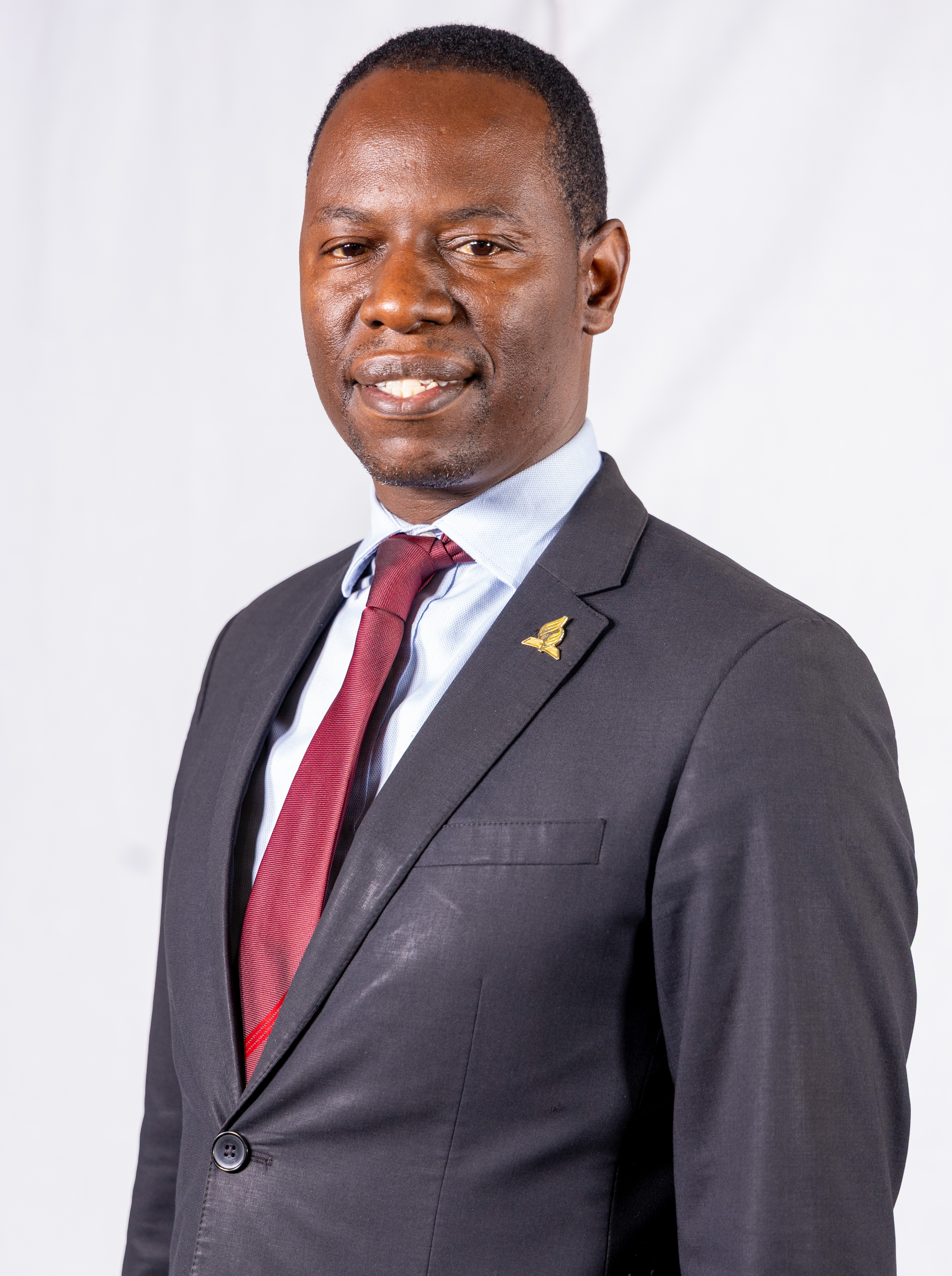
- Ph.D. in Religious (Biblical) Studies, Adventist International Institute of Advanced Studies (AIIAS) Philippines (2019)
- M.A. Religion, Old Testament concentration (2008), University of Zimbabwe
- Special Honors in Religion (2006), University of Zimbabwe
- BA.Th. Religion(2002), Solusi University
Dr. Watson Mbiriri is an ordained (2008) minister of the gospel in the Seventh-day Adventist Church wherein he has served since 2002. Watson Mbiriri is a pastor with a global reach and a strong online presence. He has served the church in various capacities. He is widely recognized as a dynamic pastor and chaplain who has had the privilege of ministering God’s word in many places in his native Zimbabwe as well as in several other African countries (Botswana; South Africa; Rwanda; Malawi; Kenya; Namibia; Zambia). He has also had opportunities to hold major evangelistic meetings and camp meetings in Europe (Romania; France; Switzerland; Germany; Czech Republic); Asia (Philippines; Malaysia; Singapore; Israel); the Pacific (Australia and Papua New Guinea) and the United States of America. All these experiences have afforded him an international and multi-cultural perspective at life in general and ministry in particular.
Dr. Mbiriri is an adjunct lecturer for Solusi University (Zimbabwe) and the Adventist University of Africa (Kenya). As for other professional qualifications, Dr. Mbiriri continues to upgrade himself and as such he recently completed the Level 1 of Clinical Pastoral Education (2025). He is also an ecclesiastically endorsed campus chaplain (2025).
Dr. Mbiriri has previously served the Adventist Church as a high school chaplain, district pastor and union departmental director. Some of the experiences that have prepared him for his current role include the different roles he has played in various institutions of learning. Having been educated in 4 Adventist schools, from primary school to graduate level. He also had teaching experiences, beginning with a short stint at a Church-run Harare Study Group (1999). While serving as Chaplain at Nyahuni Adventist High School (2002 – 2004), he also functioned as boarding master and A-level teacher for two subjects.
While pursuing his graduate studies at AIIAS, a General Conference institution for the Asian region which is in the Philippines, Dr. Mbiriri fully engaged with opportunities that were available to develop his scholarly skills. To this end, he presented numerous research papers in the various annual theological for a that took place on campus. One was the AIIAS African Theological Association and another was the AIIAS Asian Theological Association Forum. These two were student-led. The biggest of the theological for a was the AIIAS Annual Theological Forum. He presented his research work in all three fora. Additionally, he also attended the AIIAS Annual Preaching Lectureship which featured high profile preachers as they shared their wisdom.
Furthermore, Dr. Mbiriri actively participated in students’ affairs leadership. At one time he served as Chairman for Religious Affairs (2014 – 2015) and at another time, serving as a the vice president of students’ council (2016 – 2017). He was also an active member of the African students at the university. For four years (2015 – 2019), he was the principal playwriter for the African Community’s plays which were presented during the university annual cultural knight. He served as secretary of the AIIAS African Theological Association (2015 – 2016) and twice as the president of the same organization (2016 – 2018). Moreover, for a year, at the nomination of the AIIAS Seminary Dean, he served as the students’ representative in the Academic and Standards Committee (2016-2017). For yet another year, at the invitation of the university president, he also served as students’ representative in the university administrative committee (2017 – 2018). These experiences gave him privileged opportunities to interact with world-class leaders in university governance and administration.
Dr. Mbiriri has held significant leadership positions in the profession. He started out serving as high school chaplain (2002 – 2004) before transitioning to pastor several districts under East Zimbabwe Conference (2005 – 2013; 2019 – 2021). Later, he served as a departmental director for Adventist Youth Ministries; Public Campus Ministries; Chaplaincy; Communication and Personal Ministries (2021 – 2024). During his tenure as Youth Ministries Director, he led the team that organized first Zimbabwe East Union Senior Youth Congress which he dubbed Primarius (2024). Several business enterprises among the youth were born out of this congress. Additionally, a $300,000 USD revolving fund was secured and launched at this congress with the aim of supporting enterprises among youths to fight unemployment.
In addition to this, Dr. Mbiriri is an active participant on the church’s online media platforms. He started out as one of the-then regularly featured presenters on The Bible Speaks, a preaching program that the church used to air on Zimbabwe National Television. Currently, he presents; hosts and co-hosts various programs on Mandara Media; Bluffhill Media House; Hope Channel Zimbabwe and others. He also supports the chaplaincy department of the Hilbright Science College group of schools.
Personal Statement: Vision & Leadership Philosophy
My call to ministry came through a strong and compelling impression I got while reading the book Messages to Young people by Ellen G. White. Reading through a chapter titled “God’s Call to the Youth,” I felt as Isaiah when God asked, “whom shall I send and who will for us?” I felt compelled to answer that call, “here am I Lord, send me!” Drawing from the inspiration of that chapter, my philosophy is to give to God the very best of my powers, energy and time, not the leftovers. God deserves the best that I can offer.
Vision
My vision is for a learning institution where students have an optimum environment for holistic development through dynamic integration of faith and learning.
Leadership Philosophy
My leadership is grounded in four enduring principles:
Excellence
Excellence is not perfectionism; it is the disciplined pursuit of the best possible outcome in every context. It demands clarity of purpose, attention to detail, and a refusal to settle for mediocrity. In this view, excellence is both personal and collective—it calls me as a leader to model high standards while also building systems and teams that consistently produce quality results. I strive for excellence as a habit of mind and a culture of expectation.
Integrity
Yet excellence without Integrity becomes hollow. Integrity is the moral backbone of leadership. It means consistency between values, words, and actions, even when no one is watching. A leader anchored in integrity is trustworthy, transparent, and accountable. Decisions are not driven by convenience or pressure but by conviction and ethical clarity. Integrity ensures that success is never achieved at the expense of truth.
Inclusivity
Inclusivity broadens the moral and operational horizon of leadership. It affirms that leadership is strongest when it embraces diversity of thought, background, gender, age, and experience. Inclusive leadership actively listens, intentionally creates space for others, and dismantles barriers that silence or marginalize voices. It recognizes that no single individual or group holds all wisdom, and that better decisions emerge when everyone is meaningfully included.
Human Dignity
Finally, Human Dignity stands as the foundational value that gives meaning to all other pillars. Every person is to be treated with respect, compassion, and fairness, regardless of status or circumstance. This principle resists dehumanization in systems and interactions. It calls leaders to see people not as tools for productivity, but as bearers of inherent worth. Policies, decisions, and leadership practices must therefore protect, affirm, and uplift the dignity of every individual, be they students, staff members, parents or guardians.